

Data is all around us. It informs decisions, fuels innovation, and connects us to the world. But what happens when someone can’t access it? For Øystein Moseng, Chief Product Officer at Highsoft, and Flora Bazie, a leading voice in digital accessibility, the answer is clear: inaccessible data creates barriers, and those barriers exclude millions of people from essential information and opportunities.
In their recent conversation, Øystein and Flora didn’t just discuss why accessibility matters—they explored how it can reshape the way we think about data visualization altogether.
Watch the full conversation below.
Conversation highlights
Accessibility isn’t optional—it’s fundamental
“One of the biggest misconceptions about accessibility is that it’s a ‘nice-to-have,’” Flora explained. “But it’s not. It’s about equity. If someone can’t access your data, they’re being left out of decisions that could affect their lives.”
Øystein echoed this sentiment, pointing to the critical role data plays in moments of crisis. During the California wildfires, for instance, visualizations like evacuation maps and weather forecasts were vital. But if those tools weren’t designed with accessibility in mind, they could leave people without the information they needed to stay safe.
How accessible design transforms data
At Highcharts, the goal isn’t just to make data readable—it’s to make it meaningful for everyone. This means rethinking how data is presented from the ground up.
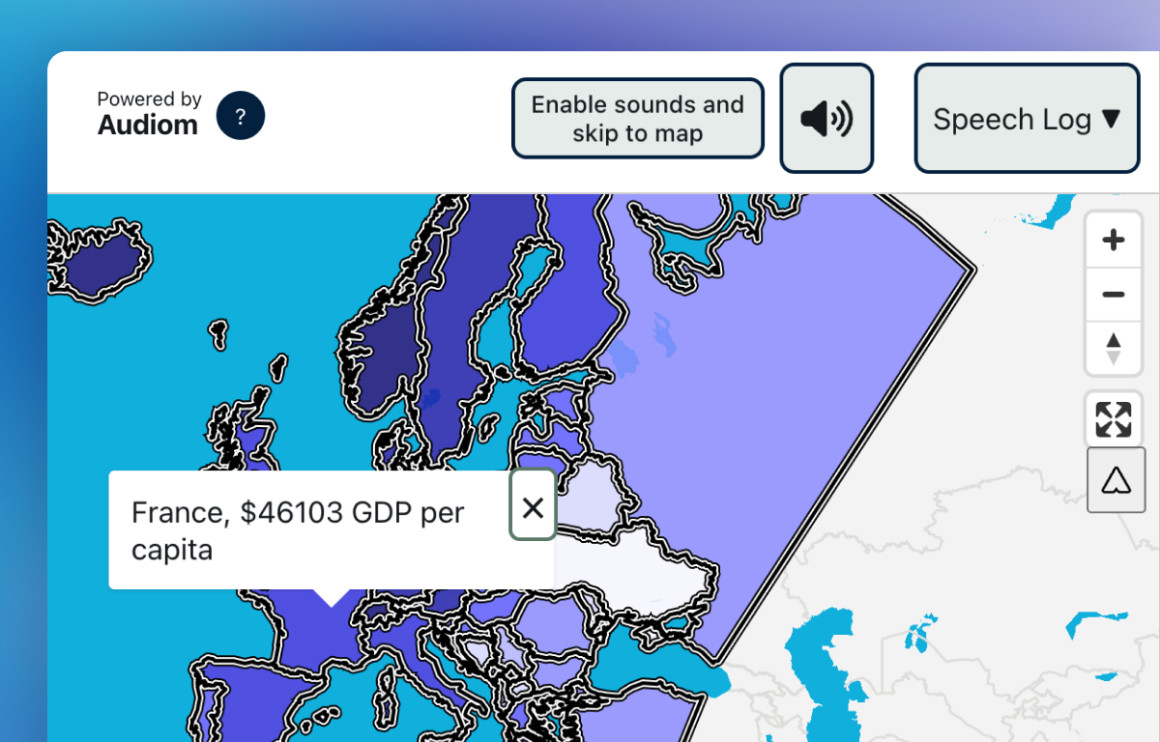
One way Highcharts achieves this is through sonification—turning data into sound. Imagine a line chart showing wind speeds. Instead of just viewing the highs and lows, you can hear them as tones that rise and fall.
Data is everywhere—so accessibility has to be, too
When you start to think about where data appears in everyday life, it’s everywhere: stock market updates, weather forecasts, public health dashboards, even your favorite football team’s stats.
As Flora pointed out, accessible design in these contexts isn’t just helpful—it’s transformative. “I’ve seen people with disabilities say they feel invisible when they can’t access basic information. It’s not just about missing out—it’s about being excluded from society.”
Øystein agreed. “We need to think bigger about what accessibility means. It’s not just about a pie chart or a graph. It’s about the role data plays in people’s lives.”
Accessibility is good business
Beyond the ethical case, there’s a compelling business argument for accessibility. With 1.3 billion people worldwide living with disabilities, the potential audience for accessible products is enormous.
Øystein shared how Highcharts has made accessibility a cornerstone of their product development. “It’s not just about reaching more people—it’s about building trust. If someone finds your website or tools inaccessible, they’ll judge your entire brand.”
Flora added that prioritizing accessibility also reduces legal risks. With regulations like the European Accessibility Act, inclusivity is becoming a requirement, not a choice. “But honestly,” she said, “the best reason to do it is because it’s the right thing to do.”
Designing with accessibility in mind
For developers, accessibility can seem daunting—but it doesn’t have to be. As Øystein explained, it’s about shifting your mindset. “Instead of asking, ‘How can we adapt this for accessibility?’ ask, ‘How can we design this to work for everyone from the start?’”
Tools like those offered by Highcharts make this easier. From keyboard navigation to ARIA attributes and sonification, these features help developers create inclusive visualizations without reinventing the wheel.
Flora emphasized the importance of listening to users. “Accessibility isn’t one-size-fits-all,” she said. “The best solutions come from understanding the people you’re designing for.”
Briefly summarized
Accessibility in data visualization isn’t just a feature—it’s a responsibility. By making data inclusive, we empower individuals, build trust, and create a more equitable world.
It isn’t just about compliance. It’s about making people feel seen, heard, and valued.
And for Øystein, the mission is clear: “We’re not just making data accessible. We’re making it meaningful.”
Ready to take the first step? Highcharts provides the tools and expertise to help you create accessible, engaging data visualizations.
Related posts
- Heat map examples using Highcharts
- Choropleth map examples using Highcharts
- Maps with latitude & longitude using Highcharts
- Lightning map – create your own using Highcharts
- Polygon chart using Highcharts
- Graphing in JavaScript with Highcharts






Leave a Reply